

Share this Story
VWU Receives Prestigious 2026 Carnegie Community Engagement Classification
The University is one of 80 private universities in the nation to garner the recognition
University News | January 13, 2026
 Virginia Wesleyan University (VWU) has been awarded the 2026 Carnegie Community Engagement (CE) Classification, a prestigious national designation conferred by the American Council on Education and the Carnegie Foundation for the Advancement of Teaching. The elective classification recognizes colleges and universities that demonstrate deep, sustained commitment to working with their communities through teaching, learning, scholarship, and service for the public good.
Institutions earning the CE Classification integrate community partnerships into their academic and operational missions, enriching research and creative activity, strengthening curriculum and experiential learning, preparing engaged citizens, and addressing pressing societal challenges. Only 80 private universities nationwide received the 2026 designation.
VWU President Scott D. Miller said the recognition affirms the University’s longstanding commitment to linking education with civic responsibility. “As a liberal arts institution, we educate socially responsible graduates who approach the world with curiosity, compassion, and critical thinking,” Miller said. “Community-based learning is not an add-on at Virginia Wesleyan—it is embedded in our academic programs and essential to how our students learn and serve.”
To ensure the long-term sustainability of its community engagement work, VWU has institutionalized structures that integrate outreach into daily operations. Wesleyan Engaged: The Center for Civic Engagement and Service Learning and Campus Ministries coordinate partnerships and provide faculty, staff, and students with resources to support meaningful community collaboration. The University maintains long-standing relationships with regional nonprofit partners including the Elizabeth River Project, the Chesapeake Bay Foundation, Haygood United Methodist Church, the Western Bayside Community Cooperative, and many others.
The University’s campus-based “Partners in Progress” further extend this work by embedding community engagement directly into learning and service. Chesapeake Bay Academy, Tidewater Collegiate Academy, and YMCA Camp Red Feather, along with partners such as Girls on the Run Hampton Roads, the Virginia Center for Inclusive Communities, and the World Affairs Council-Hampton Roads, use the VWU campus as a shared space for education, mentorship, youth development, and civic engagement that benefits both students and the broader region.
“Higher education is a vital economic engine for us all. Our colleges and universities not only fuel science and innovation, they build prosperity in rural, urban and suburban communities nationwide,” said Timothy F.C. Knowles, president of the Carnegie Foundation. “We celebrate each of these institutions, particularly their dedication to partnering with their neighbors — fostering civic engagement, building usable knowledge, and catalyzing real world learning experiences for students.”
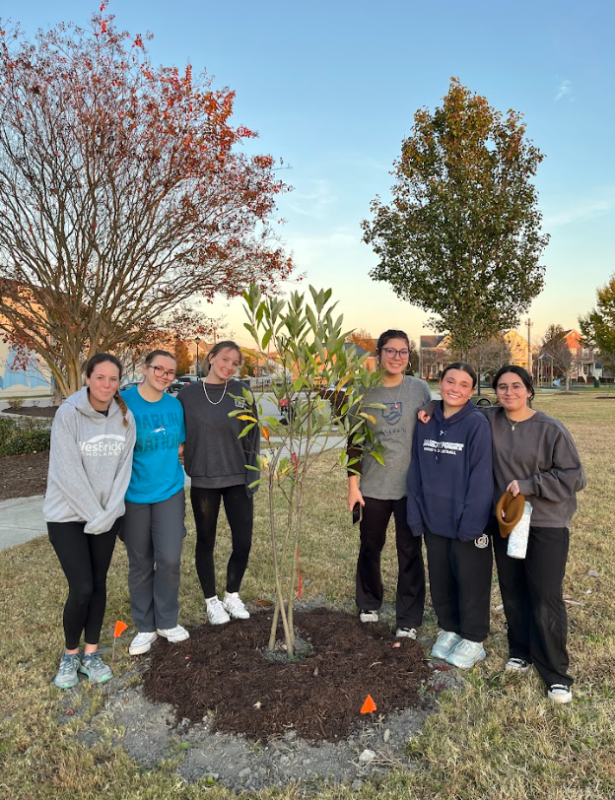
An example of learning in action is the Portsmouth Heatmapping Project, a collaborative initiative led by VWU and the Center for Sustainable Communities to investigate and mitigate extreme heat in Portsmouth, Virginia. Student and community volunteers collected temperature data to identify urban heat islands, which will inform community-driven solutions such as targeted tree planting campaigns to add shade in heat-prone areas.
“The institutions receiving the 2026 Community Engagement Classification exemplify American higher education’s commitment to the greater good,” said ACE President Ted Mitchell. “The beneficiaries of this unflagging dedication to public purpose missions are their students, their teaching and research enterprises, and their wider communities.”